 sageteachers
Gimkit and Sage Teachers side by side
| Gimkit (free plan) | Sage Teachers | |
|---|---|---|
| Free plan | About three game modes free at a time, and they rotate | All four games open on the free trial |
| How it plays | One question set, many modes | Four separate games: drawing, a platform race, sledging and a 3D hunt |
| Paying | Pro is $14.99 a month or $59.88 a year, in US dollars | 20 free tokens, one per game. Pro: ready-made and your own questions unlimited |
| In-game money | Yes: earn cash, buy upgrades and power-ups | No: points, standings and a podium |
| Homework | Assignments, on Pro only | Not in these games |
| Pupil accounts | Not needed for live games | Not needed: a 5-digit code at sageteachers.com/join |
Is Gimkit free?
Partly: Gimkit Basic is free, but only about three game modes are open at a time. Gimkit’s own help centre says it rotates the free modes, and those take as many students as you want. Other modes, homework assignments, audio questions and image uploads need Gimkit Pro, and a Pro-only mode stops at 5 players on the free plan. New teacher accounts get a 14-day Pro trial, then drop back to Basic.
So the player cap is not the catch. What catches teachers out is planning a lesson around a mode and finding it has rotated out by the time you get to it.
Where Gimkit is better
Gimkit’s earn-and-spend idea is genuinely clever. A right answer earns in-game cash, a wrong one costs some, and pupils spend it on upgrades and power-ups, so a quiz turns into a strategy game. It has more than ten modes on one question set and keeps adding more. KitCollab lets the class write the questions, and Gimkit carries no adverts. If your school already pays for Pro, it is a strong choice.
Sage’s games have no in-game economy and no homework assignments, and Parkour, Slope Riders and Scavenger Hunt are still marked Beta. Sage’s bet is different games that each do one thing, alongside 90+ other classroom apps.
How each game plays
Doodle Detective
One pupil draws on their device and the drawing appears live on the board. Everyone else races to type the word on theirs, and letters of the answer appear as the clock runs down. A fast guess scores up to 1,000 points, and the drawer scores for every pupil who gets it. Guesses and names go through a word filter before they reach the board.
Parkour
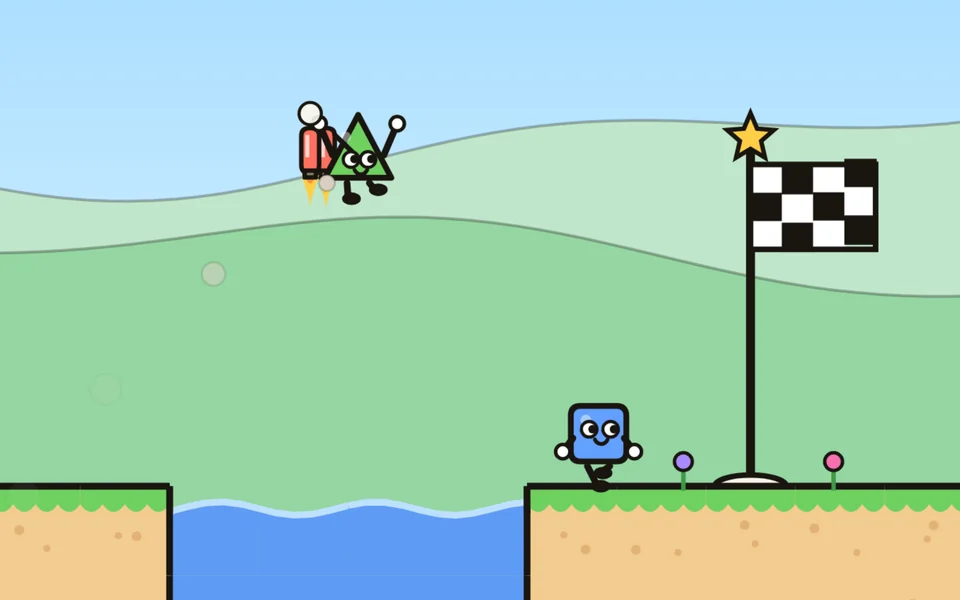
Pupils run and jump through ten levels on their own devices, and the board shows the whole class racing. Between levels, right answers power up a perk for the next one; a wrong answer costs a five-second wait. The fastest total time wins.
Slope Riders
Right answers earn ink. Each pupil draws a slope from A to B on their device, and their rider sleds down it through circles, with smaller circles worth more. The board plays everyone’s runs in heats of five, then the standings.
Scavenger Hunt
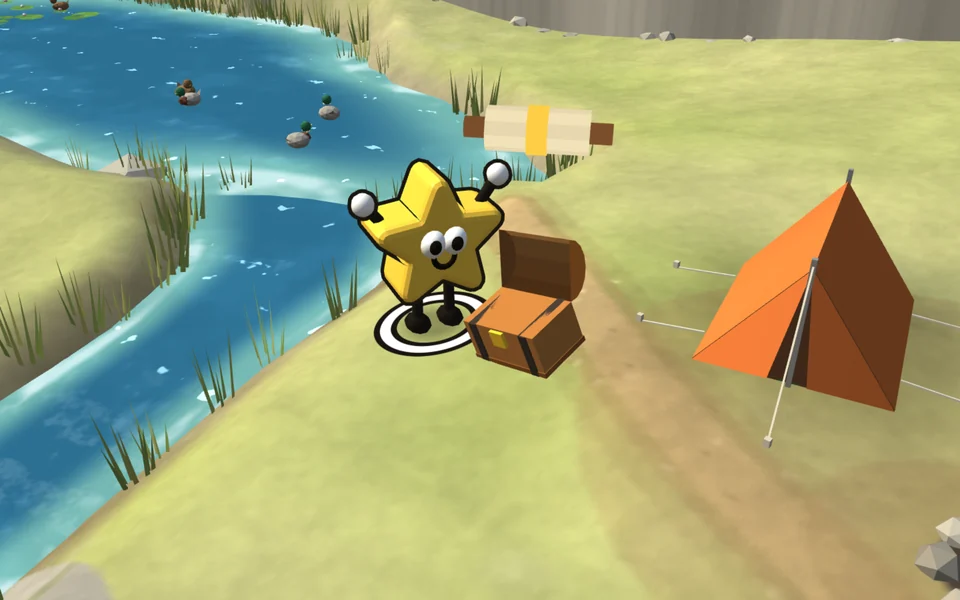
Small teams explore a 3D world on their own devices, hunting for ten scrolls. Each scroll holds a puzzle, from a word search to a secret code, and it opens on every phone in the team so they solve it together. Most scrolls solved wins.
Want a straight live quiz instead? Lightning Round is our answer to Kahoot.
Where the questions come from
Each game takes ready-made questions, your own, or a set written on any topic you type. Parkour and Slope Riders share the same three choices. Doodle Detective has a ready-made list of drawable words, your own words one per line, or words on a topic. Scavenger Hunt has ten ready-made hunts, from Minibeasts for ages 5 to 7 to the periodic table for 14 to 16, or ten puzzles written on your topic for ages 5 to 7 up to 16 to 18. Whenever a set is written for you, you see it before anyone joins.
What is free, and what costs a token
Every game is free to try: opening one uses a token, and every teacher account starts with 20. Setting up the same game again soon after is free. Having a set written on a topic also uses one token. With Pro, ready-made and your own questions are unlimited, and only the written-for-you sets use a token, from 50 a day. Pupils never need accounts, on any plan.
Questions teachers ask
Is Gimkit free?
Partly. Gimkit's free plan, Gimkit Basic, rotates its free game modes, with generally three free at any time, and those free modes take as many students as you want. Other modes, homework assignments, audio questions and image uploads need Gimkit Pro. New teacher accounts get a 14-day Pro trial (Gimkit's own help centre, checked October 2026).
How much is Gimkit Pro?
Gimkit lists Pro at $14.99 a month or $59.88 a year, and a whole-school plan at $1,000 a year. It is priced in US dollars, and we found no pound price on Gimkit's own site (checked October 2026).
What games are like Gimkit?
On Sage Teachers: Doodle Detective, a drawing and guessing game; Parkour, a platform race powered by right answers; Slope Riders, where right answers earn ink to draw a sledging run; and Scavenger Hunt, a team hunt for ten puzzle scrolls in a 3D world. All four are whole-class games played on pupils' own devices, and all are free to try.
Does Gimkit have a player limit?
Gimkit's hard limit is 500 students in a live game, and 60 in its 2D game modes. On the free plan, Pro-only modes stop at 5 players.
Do pupils need accounts?
No, on either. Gimkit says students can play live games without an account. On Sage Teachers, pupils go to sageteachers.com/join, type the 5-digit code and their first name, and they are in. Only the teacher signs in.
Do these games have in-game money like Gimkit?
No. They score points, show the standings and end on a podium. If the earn-and-spend loop is what your class loves, that is Gimkit's own idea and it does it well.
Can I use my own questions?
Yes. Parkour and Slope Riders take your own questions, a ready-made set, or a set written on any topic. Doodle Detective takes your own words, one per line. Scavenger Hunt writes ten puzzles on your topic, and you check them before the lobby opens.
Try one with your class
Open it on your board, put the code up, and let the whole class in. No download, no pupil accounts.