 sageteachers.com
Browse the apps →
sageteachers.com
Browse the apps →
Kahoot's free plan stops at 10 players. Lightning Round lets the whole class join a live quiz on their own devices with a 4-digit code, and faster correct answers score more. Ready-made quizzes and writing your own are free; generating one on any topic spends one of the 20 free tokens every account starts with.
| Kahoot free | Sage Teachers' Lightning Round | |
|---|---|---|
| Players | Capped at 10 (3 on a business account) | No cap, the whole class joins |
| Cost | Free trial tier, paid plans for more players and features | Free to try, ready-made and write-your-own |
| Scoring | Speed-based points | Speed-based points, measured on each pupil's device |
| Pupil accounts | Not needed to join | Not needed, join with a 4-digit code |
| Make your own | Create quizzes free, some question types paid | Write your own free; generate on any topic from your 20 free tokens |
| Beyond quizzes | Quiz platform | 90+ apps: timers, games, printables, group makers |
Kahoot is polished, familiar, and has an enormous bank of public quizzes. The music, the podium, the whole format is something pupils recognise instantly. If your class is small, or your school pays for a plan, it is a proven choice.
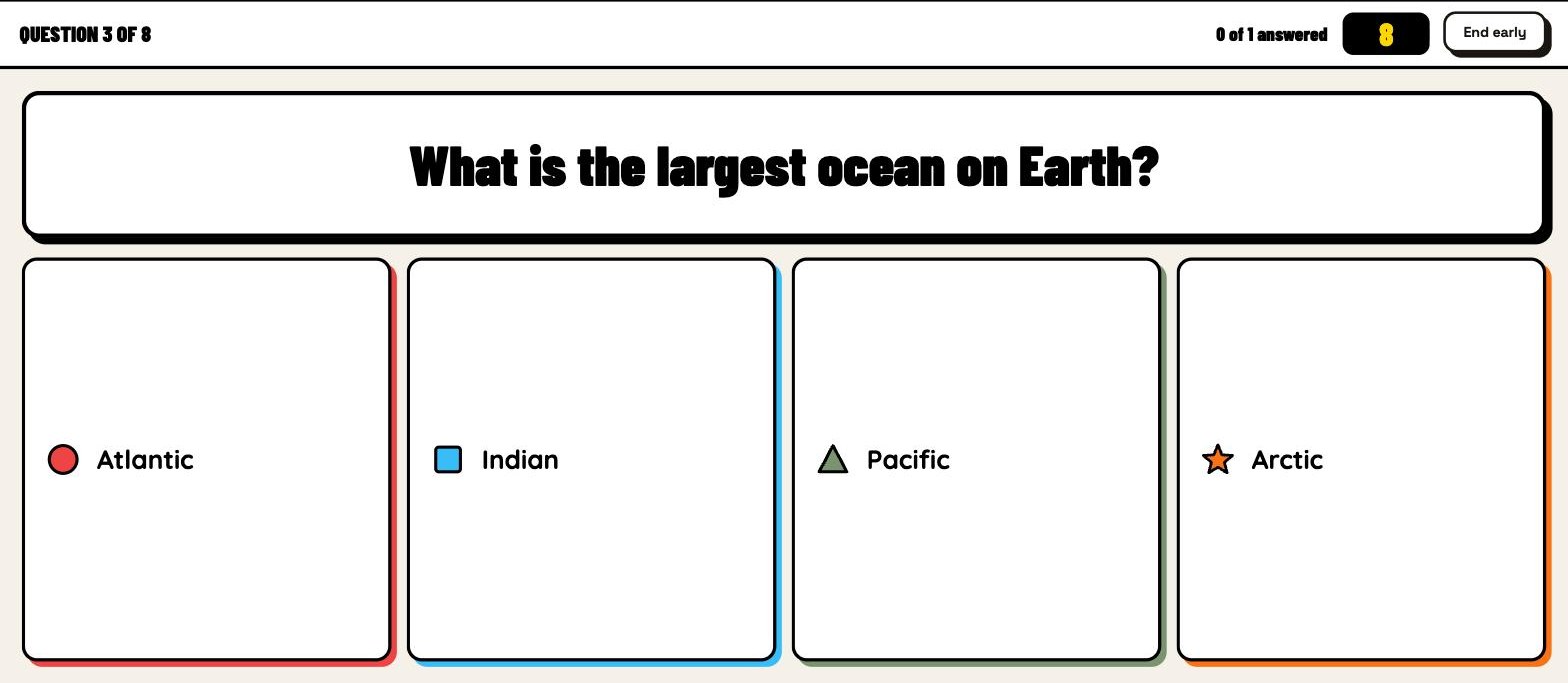
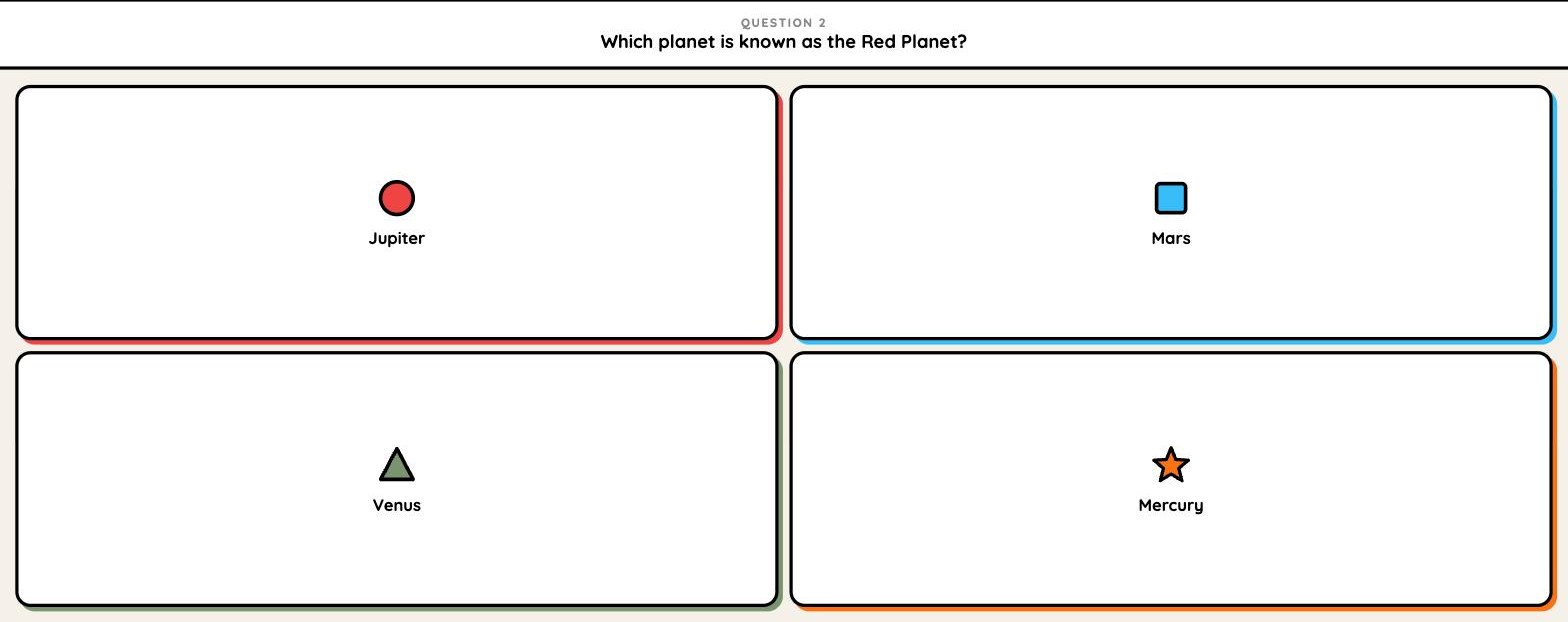
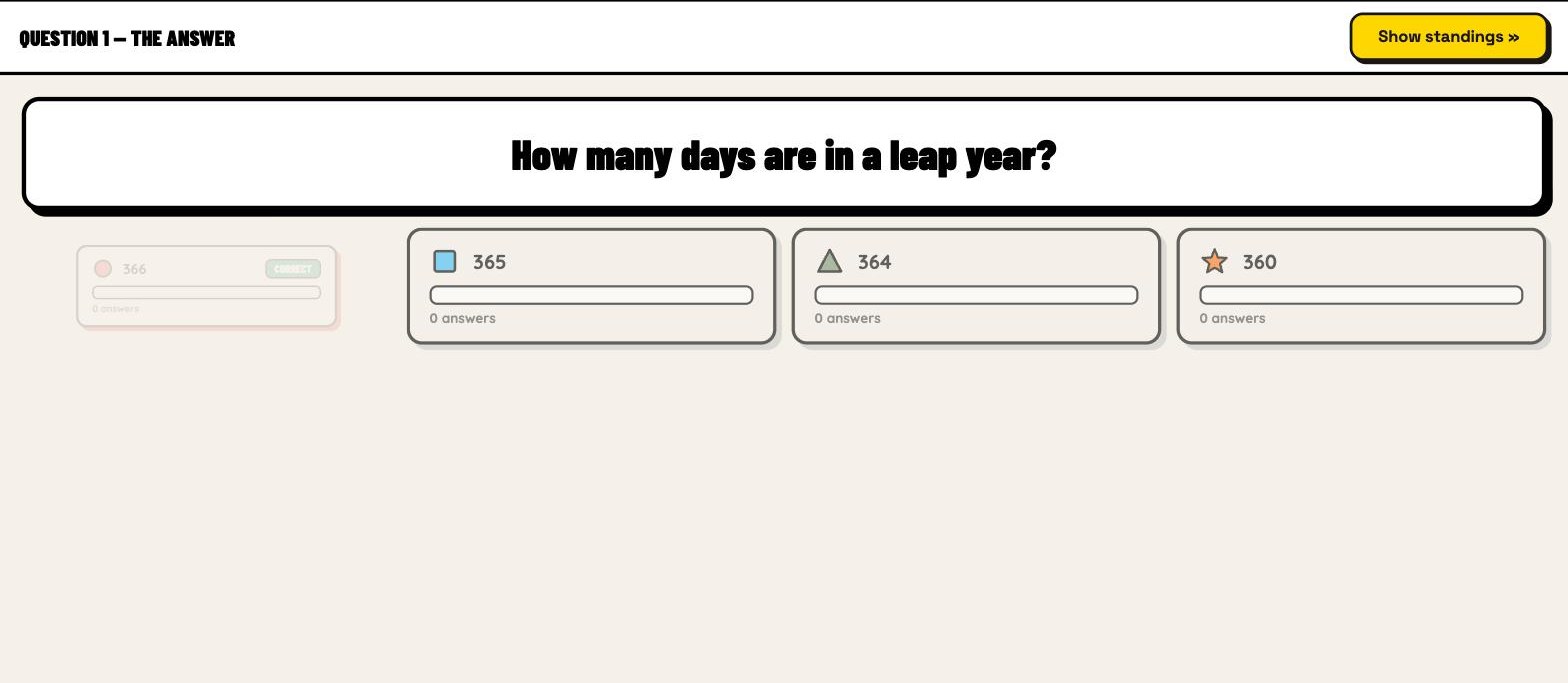
The big one is the player limit. Kahoot's free plan caps a game at 10 players, which does not fit a class of 30 without paying. Lightning Round has no cap, so the whole class joins for free with a 4-digit code and no accounts. It keeps the bits that make these games work, a live question on the board, answers on each pupil's own device, speed-based points and a podium at the end, and both the ready-made sets and writing your own are free.
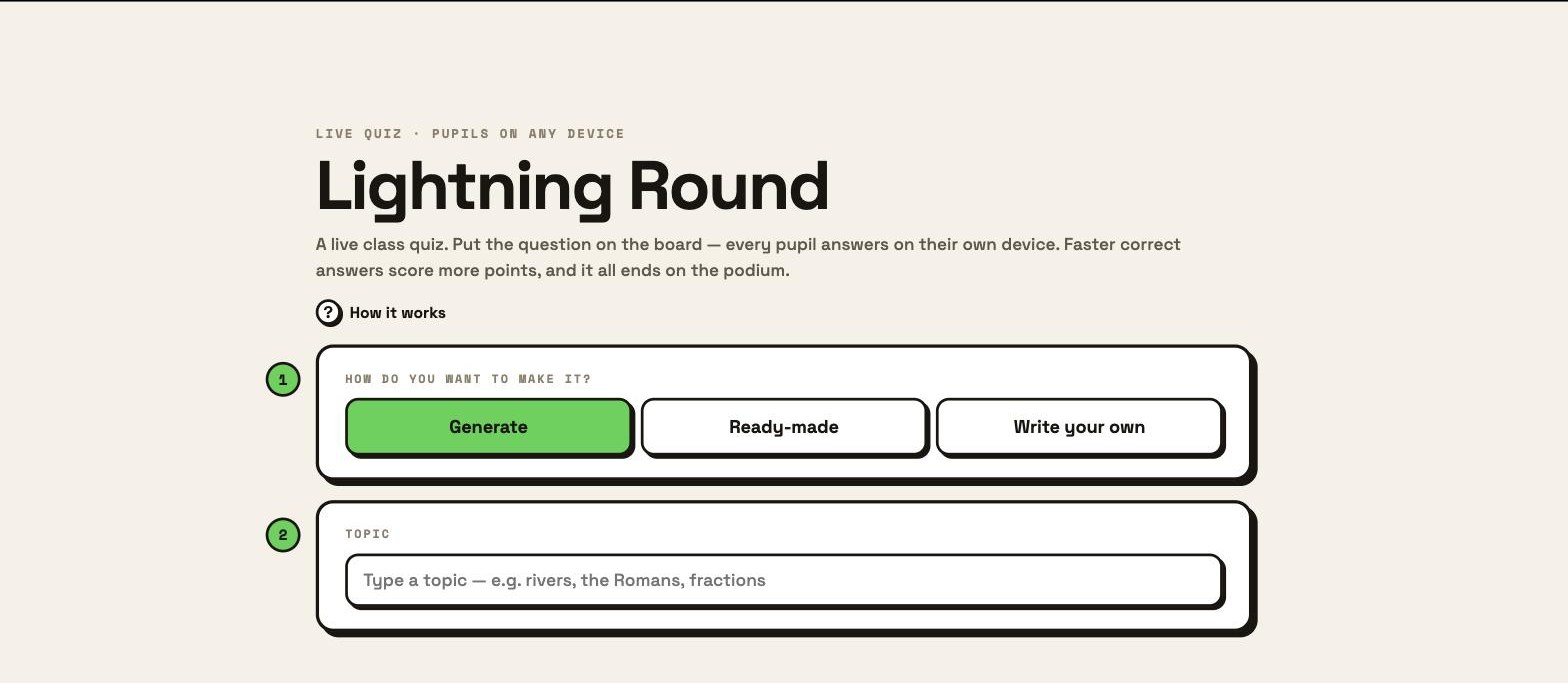
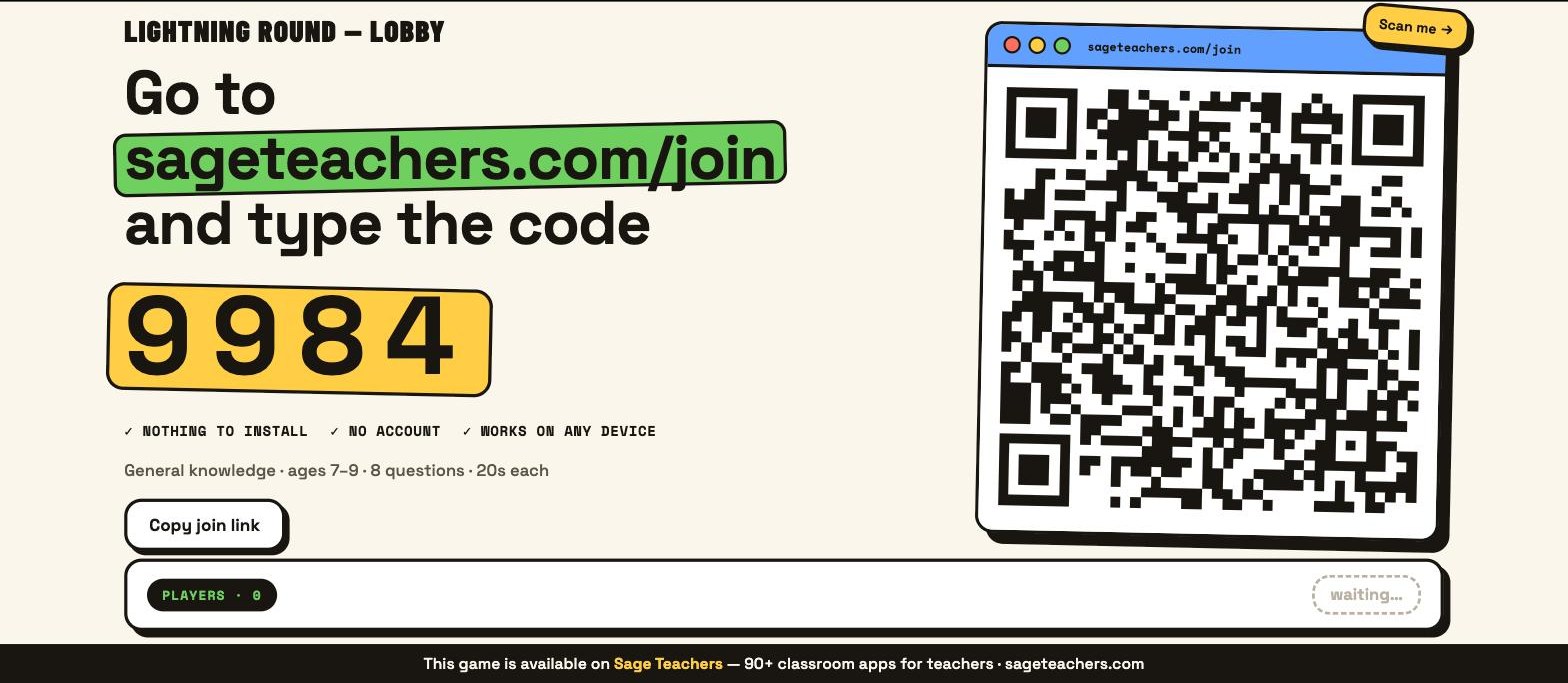
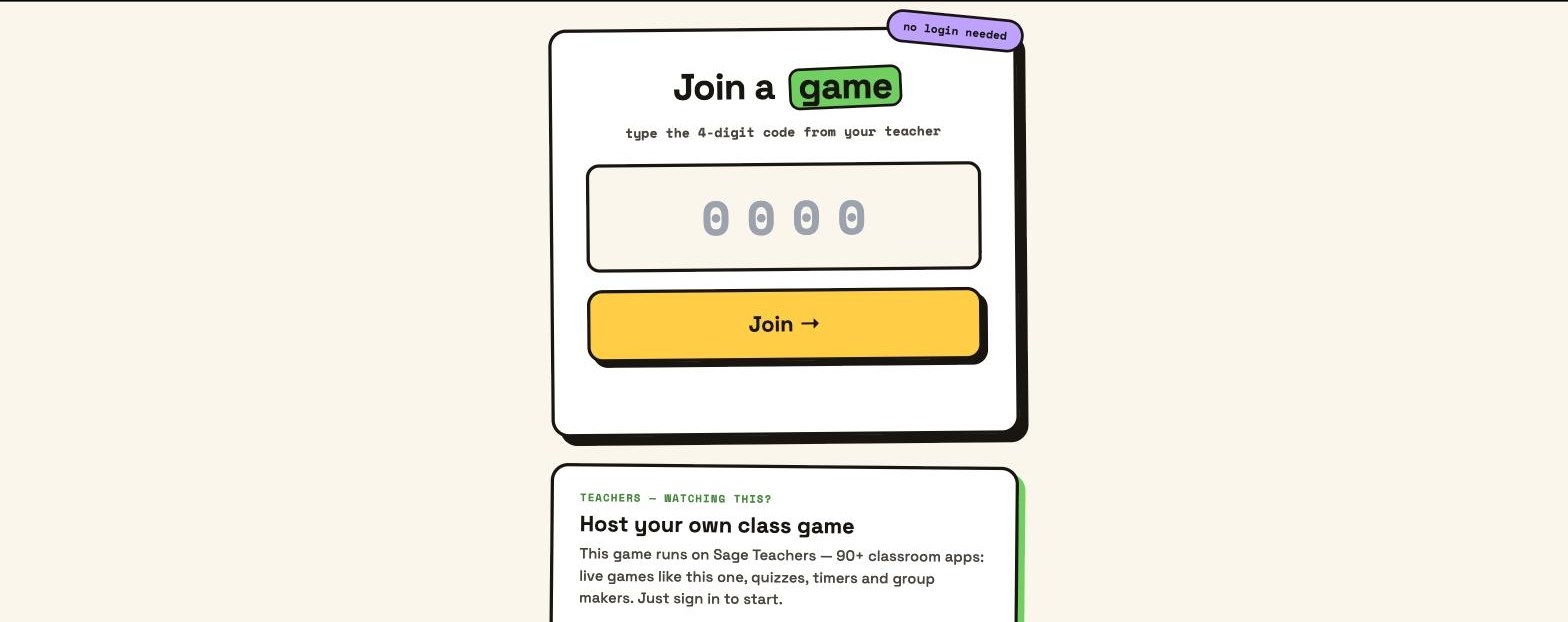
Pick a ready-made question set, write your own, or generate one on any topic and age band. Put the room code on the board. Pupils go to sageteachers.com/join, type the 4-digit code, and they are in, with no accounts. Each question appears on the board and on their device, and the quicker they answer correctly the more points they score, measured on their own device so it is fair. Between questions the standings update, and it finishes on a podium.
The big quiz platforms all have enormous public banks, and on a popular topic that is a real advantage — you will find a Kahoot on times tables or the water cycle in seconds. The gap shows up on the narrow stuff. Search a bank for something like inherited and genetic characteristics at Year 6 level and you get quizzes pitched at the wrong age, quizzes covering the wrong half of the topic, or nothing usable at all, and you end up building it yourself in a free period you did not have.
Lightning Round takes the other route. Type the topic, pick an age band from 5–7 up to 16–18, choose how many questions and how long each one runs, and it writes the set. Then it shows you every question on a preview screen before anyone joins, so you read them, fix the ones you do not like, and only then put the code on the board. That check is the point — generated questions are worth reading, and reading them at your desk beats discovering a bad one in front of thirty children.
Generating a set uses one token, and every teacher account starts with 20 free. Playing a ready-made set or a quiz you typed yourself never spends anything.
Kahoot is not the only live quiz teachers compare, and the honest answer differs for each one. Both of these are good tools, and the player cap is not the argument against either.
Blooket lets a free account host up to 60 players, with 300 on Blooket Plus (their own help centre, checked August 2026). Sixty is plenty for one class, so if a single class quiz is all you need, the free cap will not get in your way. Where Lightning Round differs is the size of the room — there is no cap at all, so a year group in a hall or two classes joining the same game works the same as one class — and being able to generate a set on your own topic rather than picking from a bank.
Wayground is the tool that used to be Quizizz — the rename happened over the 2025–26 year and the site now lives at wayground.com. If you came looking for Quizizz and landed somewhere that felt unfamiliar, that is why. It has grown well beyond quizzing into a broader lesson platform, which is a genuine strength if that is what you want. Lightning Round is deliberately the opposite: one game that does one thing, alongside 90+ other separate classroom apps you open only when you need them.
None of the three needs pupils to make an account, and neither does Lightning Round.
Lightning Round is free to try with no player cap. Its ready-made question sets and the write-your-own option are both free. Generating a quiz on a topic with AI uses one token, and every teacher account starts with 20 free ones; Pro adds a daily allowance. Pupils never need accounts, on any plan.
The free plan caps a game at 10 players (3 on a business account), so a full class needs a paid plan. Lightning Round has no cap, so the whole class joins for free.
Lightning Round is a free-to-try live quiz with no player cap. Pupils join on their own devices with a 4-digit code, speed scores more, and it ends on a podium. Ready-made and write-your-own are free; generating spends one of your 20 free tokens.
No. They go to sageteachers.com/join, type the 4-digit code, and they are in. No accounts, nothing to install.
Yes, but a generous one — Blooket’s own help centre says a free account can host up to 60 players, and 300 on Blooket Plus (checked August 2026). That fits a class easily. Lightning Round has no cap at all, which matters for a year group in a hall rather than a single class.
Quizizz was renamed Wayground over the 2025–26 school year and now lives at wayground.com. Existing accounts and join links carried over. If you are looking for a simpler live quiz after the change, Lightning Round is free to try with no player cap.
Yes. Type the topic, pick an age band from 5–7 to 16–18, and Lightning Round writes the set, then shows you every question on a preview screen to edit before anyone joins. It uses one token, and every teacher account starts with 20 free.
Yes. Ready-made sets and writing your own are free for good, however many times you play them. Generating a set with AI spends one of the 20 free tokens every account starts with.
Open it on your board, share the code, and let the whole class in. No download, no pupil accounts, no player limit.