Maths starters that are ready before the class is
A maths starter is five to ten minutes of quick, whole-class maths at the start of a lesson, and every app on this page puts one on the classroom board, ready to go. Some keep number facts sharp: times tables, number bonds, doubling and halving. Others ask children to estimate, explain or spot a pattern. A good starter does one of those things well and then stops, so the main lesson begins while the room is still switched on.
Most starter resources for primary maths are slide decks. Next year the questions are exactly the same. Here the questions come from a ready-made set or are made fresh for your class, and most keep the time and the score for you.
What makes a good mental maths starter?
Every child answers, not only the quickest hand. It practises something already taught, because a starter is for fluency, not for new learning. It is short, and it ends on a clock rather than drifting. And the answers are seen straight away, so a wrong method is caught in the first five minutes instead of in the books that evening.
Mental maths starter games for times tables and number facts
When every child has a tablet or laptop, Quick Fire Maths is the quickest warm-up there is. Each child gets one question at a time, taps the answer on a number pad and races a two-minute clock (or 1, 3 or 5 minutes). In a Live race the class joins with a code and the board shows names moving up the leaderboard, never anyone's answers.
With only the board, Times Tables Blitz fills a multiplication grid against the clock. Pick any tables from 1 to 12, or Mixed for the classic square, and each grid also prints as a question sheet with a matching answer sheet. Weekly Mental Maths reads a 24-question test aloud for every week of the year, then helps you mark it together on the board. For counting in steps, the Hundred Square lights two times tables at once, one green and one pink, and any number in both turns lilac. Ask the class to predict which squares will change first.
Maths bingo and number of the day starters
Bingo has a ready-made Times Tables set, a set of maths words and classic numbers 1 to 90. Print a set of unique cards, then call the game on the board. Switch to calling clues and the board shows a definition instead of the word, so a child has to know that "the middle number when you put a list in order" is the median before they can cross it off.
For a number of the day, build it on the Place Value Chart. The counters sit in their columns, and underneath the number is written in figures, partitioned and in words. Hide the words first and let the class say it. Then press times ten and the answer appears in a new row below, with the first number still on screen to compare. Both are free tools from Maths Manipulatives, with nothing to sign in to.
Maths starters that build reasoning
Shape, Space & Measure Reasoning gives a short test for every week, each question with its own drawn diagram: a jug to read, a shape to reflect, a chart to interpret. Mark on the board starts a countdown, then shows one question at a time so you can take answers and model the method. Maths Extensions writes four multiple-choice word problems on the objective you type, from Warm up to Ultimate challenge, with worked solutions; show just the Warm up as a starter and save the rest for later in the lesson.
Higher or Lower is estimation dressed up as a game: the class decides whether a hidden real-world number, such as the speed of a cheetah, is higher or lower than the one on screen. Countdown's numbers round asks for six tiles and a target, reached with adding, subtracting, multiplying and dividing. The clock starts at 30 seconds and goes up to 3 minutes for younger classes.
Maths starters by year group, KS1 and KS2
- Year 1 and Year 2 (Kindergarten and Grade 1): count in 2s, 5s and 10s on the Hundred Square; Quick Fire Maths for bonds to 10 and 20, then the 2, 5 and 10 times tables; the Place Value Chart with only tens and ones.
- Year 3 (Grade 2): the 3, 4 and 8 tables on Quick Fire Maths, and a marker on the Hundred Square moving in tens.
- Year 4 (Grade 3): every table to 12 × 12. Times Tables Blitz on the board and Quick Fire Maths at home make good practice before the UK Multiplication Tables Check.
- Year 5 (Grade 4): square and cube numbers on Quick Fire Maths, and a tenths column on the Place Value Chart to divide by ten.
- Year 6 (Grade 5): the ten-question Shape, Space & Measure test, Countdown's numbers round, and percentages and ratio on Quick Fire Maths.
Quick Fire Maths and Weekly Mental Maths also carry on into secondary, up to Year 11 and Grade 10.
5 minute starter activities with no preparation
On a morning with no time at all, open the Hundred Square or the Place Value Chart and ask one question. Quizmaster has a ready-made General Maths quiz for two to four teams, and Lightning Round has a ready-made Quick maths set for ages 7 to 11. Pick one, press start, and the lesson is moving.
Questions teachers ask
Are these maths starters free?
The Hundred Square and Place Value Chart are free for good. The rest are free to try: every account gets 20 free tokens, and most use one to start or make a game. Times Tables Blitz uses one token a day, which covers playing and printing all day. Pupils who join on a device never sign in.
Do the children need their own devices?
Only for Quick Fire Maths and Lightning Round, and Higher or Lower if you want pupils to play along. Everything else runs from the board.
Do they work for math classes in the US?
Yes. Quick Fire Maths labels every age with its US grade, and Weekly Mental Maths has tests for Kindergarten to Grade 10 that follow Common Core, in dollars and cents.
How long should a maths starter last?
Five to ten minutes. Two minutes of Quick Fire Maths or one Countdown round is plenty.
Written by a practising primary school teacher, and part of the free-to-try Sage Teachers apps.
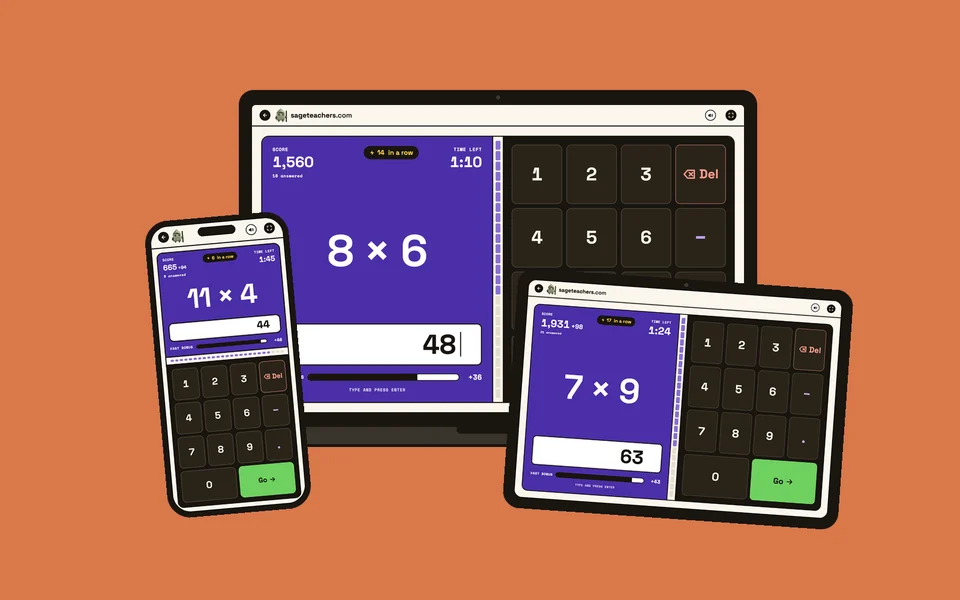 Quick Fire MathsEvery child races a two-minute clock of quick questions on their own device.Number facts
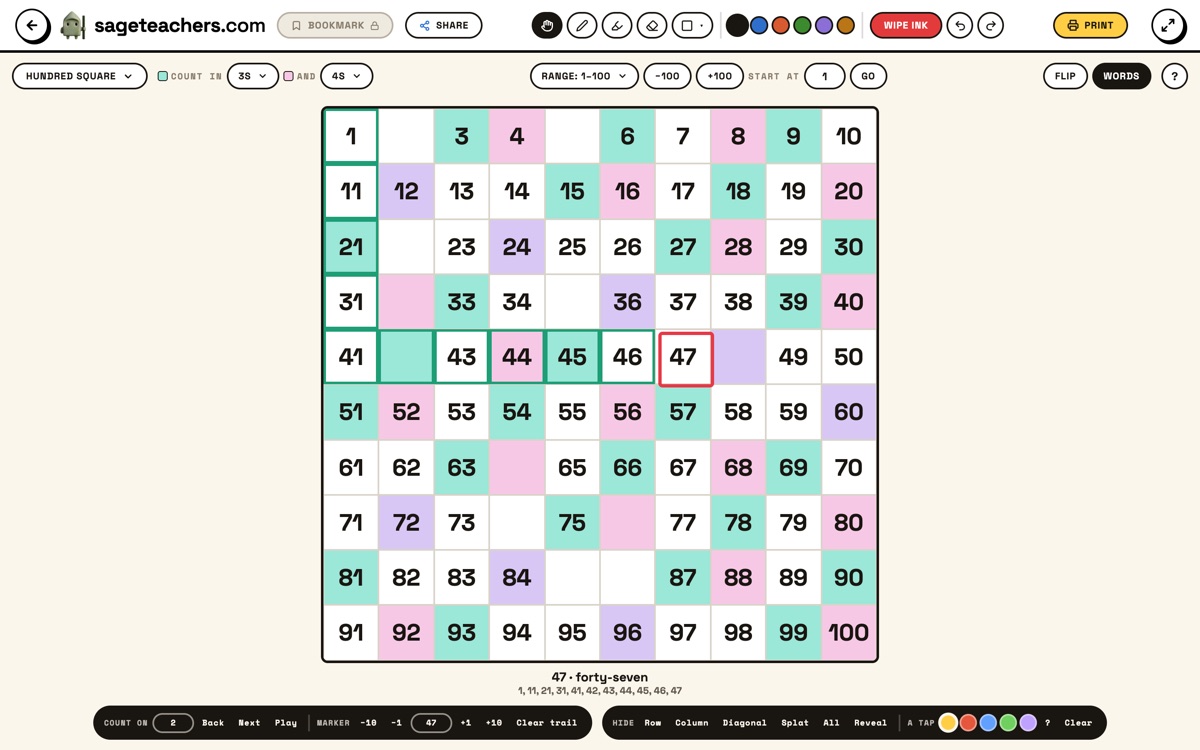 Hundred SquareLight up two times tables at once, or blank numbers for the class to work out.Number facts
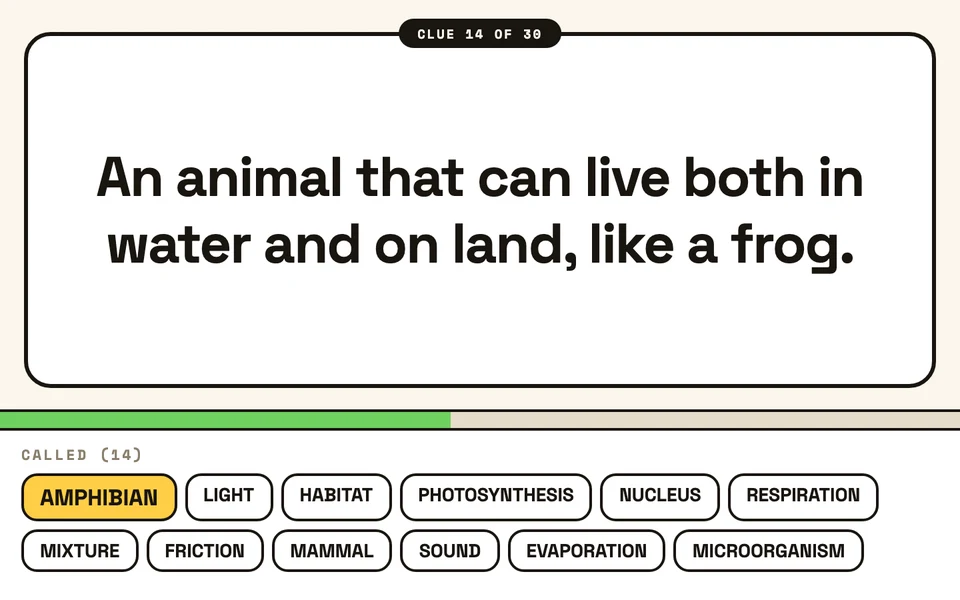 BingoTimes tables, maths words or numbers 1 to 90, called live on the board.Number facts
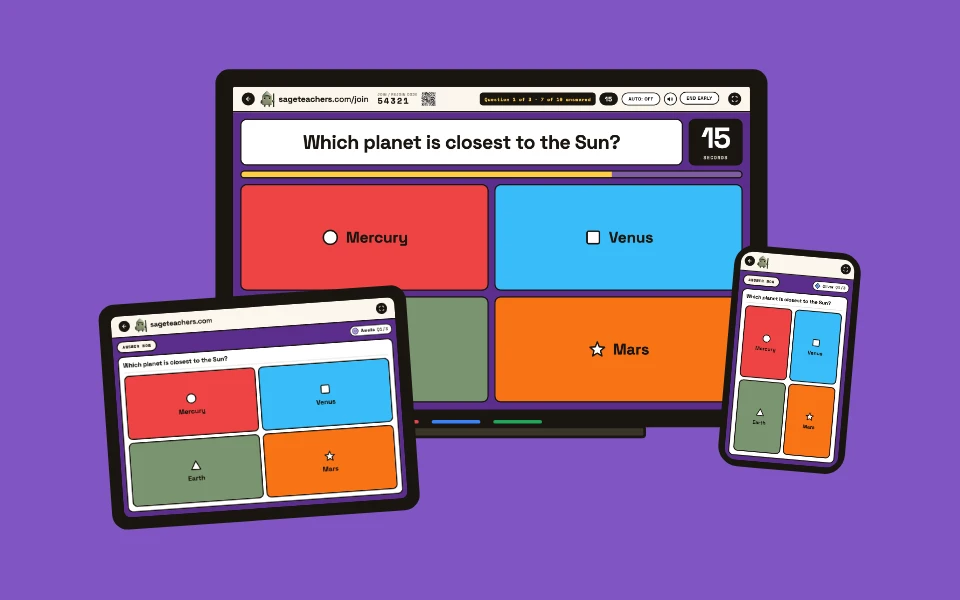 Lightning RoundThe question goes on the board and every pupil answers on a device.Facts and reasoning
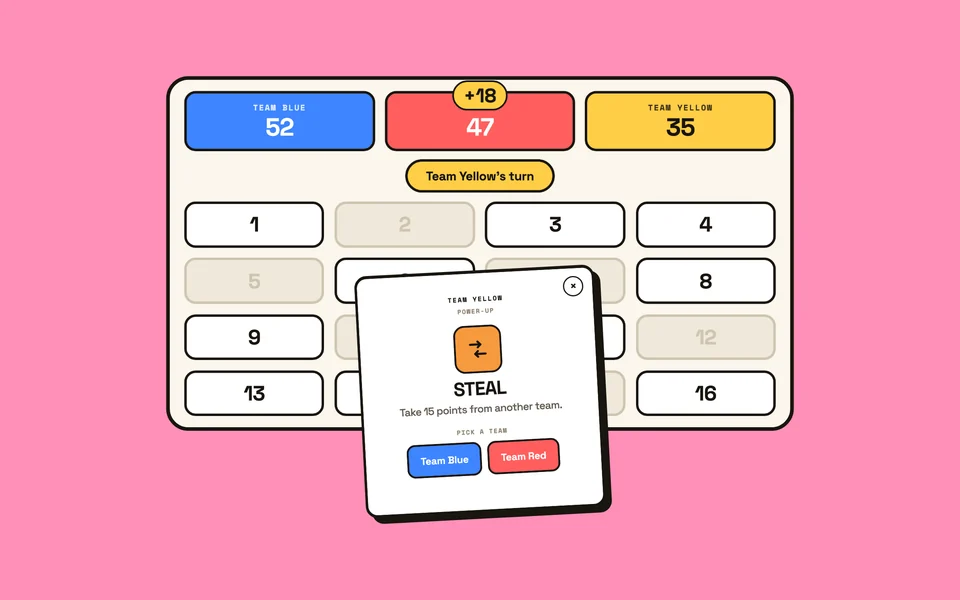 QuizmasterTeams pick tiles and answer, with a ready-made General Maths quiz.Facts and reasoning
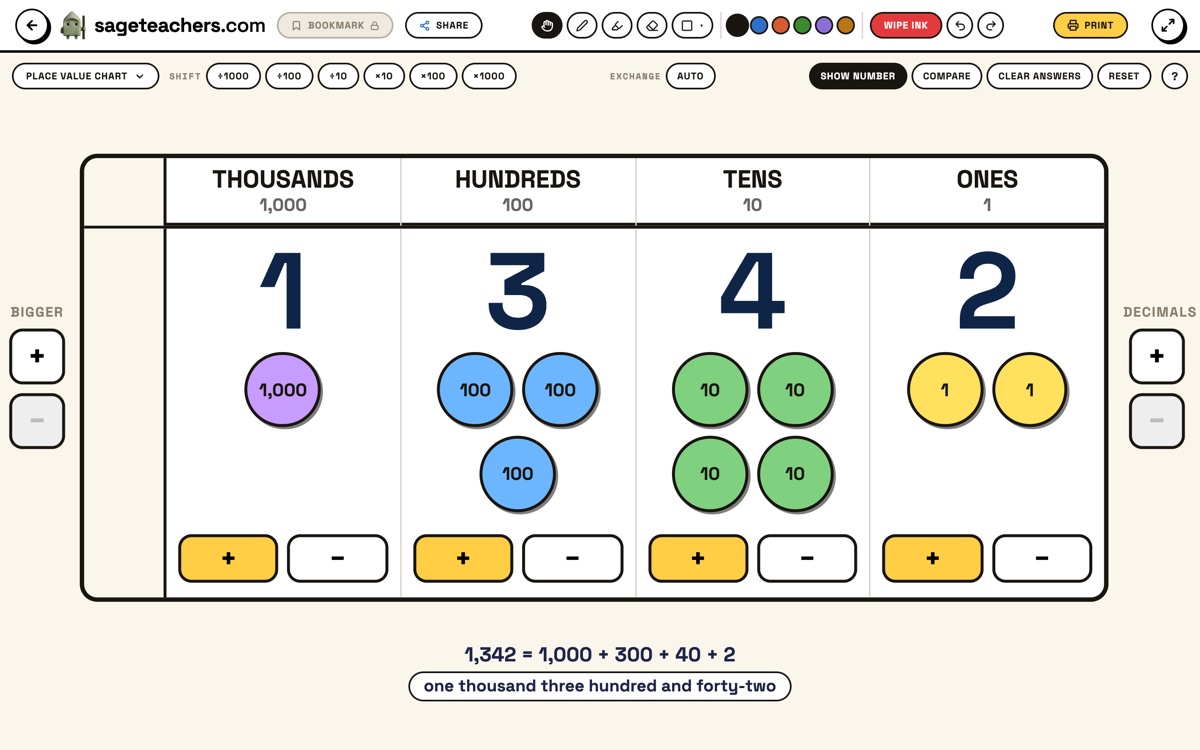 Place Value ChartBuild a number from counters, then times or divide it by ten.Reasoning
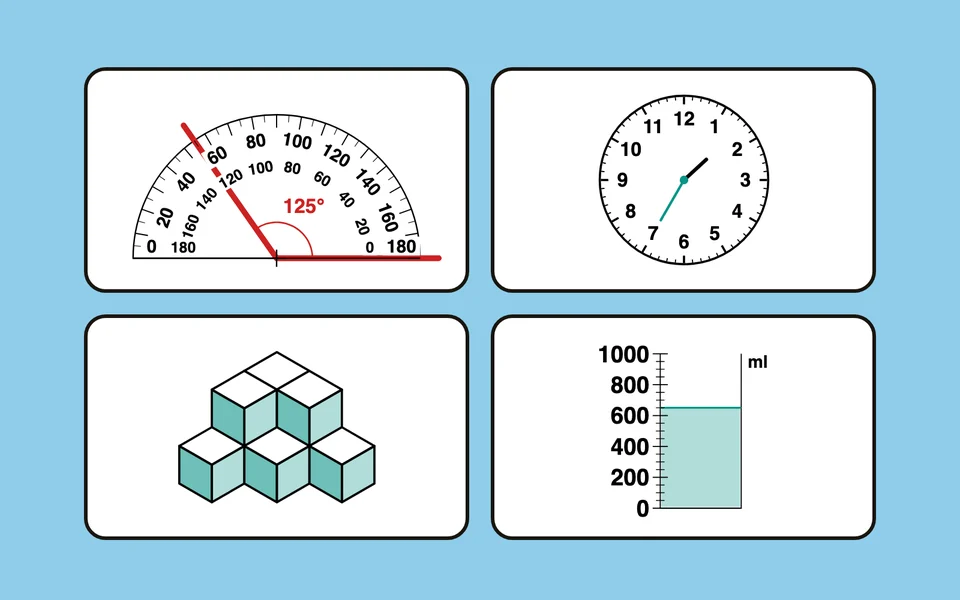 Shape, Space & Measure ReasoningA short weekly test with drawn diagrams, gone through one question at a time.Reasoning
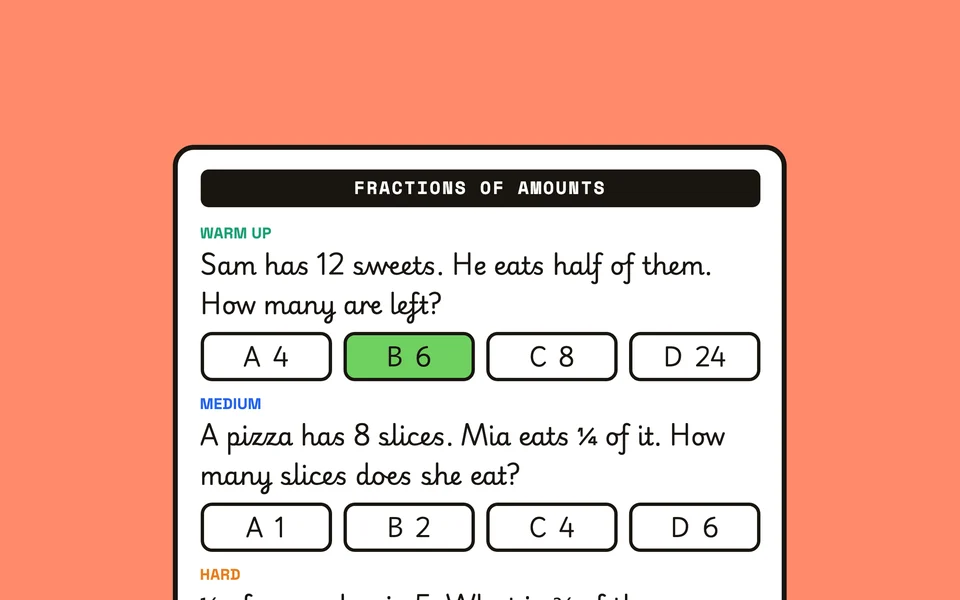 Maths ExtensionsGraded word problems on the objective you are teaching this week.Reasoning